Jun 11 2025
Students at North Beach Jr./Sr. High School faced a situation where many students were often passing on opportunities to show up and support their school. Dances were lightly attended. Games were played to spotty attendance. School spirit had vanished.
In just one year, North Beach student leaders turned things around. Now, assemblies are packed with engaged students, homecoming drew the largest crowd in years, and the campus buzzes with activity.
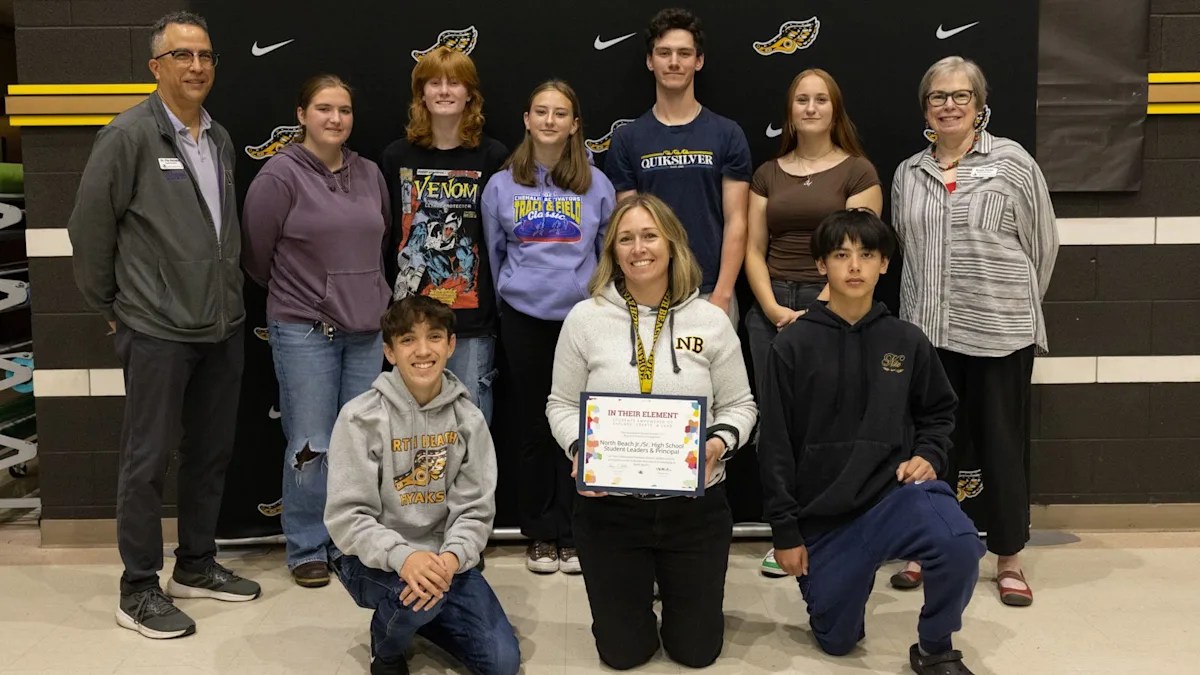
ESD 113’s Board of Directors is proud to recognize these student leaders and the school principal as recipients of the “In Their Element” award for June for their work to create a climate and culture of belonging in North Beach.
“There was a big drought in spirit before,” explained Associated Student Body President Kyla Eden. “People didn’t want to show up to school. No one wanted to come to dances. They said they were boring.”
It wasn’t always this way. ASB member Dallas Alexander remembers the stories from her older siblings when they attended, and pride in the school was high.
“Tradition was something we needed to bring back,” said Dallas.
“Our focus was to rebuild the culture and the tradition of our school and bring back the past years’ pride and make it alive again,” added Kyla.
The transformation began with intentional action. Student government officers took charge of assemblies and events. They planned engaging fundraisers like Donut Day celebrations and car washes on the day of a Clean Shore beach clean-up event, creating festive community connections.
They also focused on setting up events like dances and awards ceremonies for the middle schoolers, something that Kyla says was lacking when she was a middle schooler herself.
This year’s beginning-of-school assembly sparked the turnaround that sustained momentum through homecoming. Students credit their success to taking ownership of school culture and tradition.
They expanded club opportunities, launching the drama and gaming clubs, while strengthening existing programs.
Daily morning announcements replaced sporadic communication that occurred “once or twice every three weeks,” ensuring everyone knew what happened each week.
“We’ve made a lot of efforts to flesh out our clubs,” said ASB Vice President Cash Gerzits. “We wanted to create more environments for the students to be together beyond athletics.”
All of these changes led to more student engagement. Student attendance hovered around 60% last year, but has now increased to 85% — and over 90% for some grades — according to North Beach Principal Wendy McCoy.
“Now, when you come to school, people have their groups and like to be here,” said Kyla.
Athletic participation also increased across all sports, with girls teams seeing significant growth after years of struggle. Students attended home games in much higher numbers and traveled to support their fellow Hyaks.
Speaking of their mascot, the student government preserved their traditional Hyak logo when a proposal was made to remove Native American imagery and change it to a wave. The original design came as a gift from a tribal president, carrying cultural significance beyond its visual appeal.
Students created educational displays explaining the meaning of the Hyak symbol, strategically placing them in the gym and cafeteria so that community members, teachers, and visitors could learn what it means to be a Hyak.
“If you look at it, you think it’s a flying shoe. It has a way deeper meaning than that, and it’s all within the art,” said Kyla.
Looking ahead, student leaders plan to expand fundraising support for sports teams and clubs while establishing senior trip traditions. They aim to create sustainable funding systems that clubs can manage independently.
“We want our graduating classes to start having senior trips, even if it could just be something small, but we want them to have a way that they can celebrate together,” said Kyla.
The students understand that community engagement strengthens school support. Their fundraising efforts bring students into the community, building relationships that generate ongoing advocacy for education.
The transformation demonstrates what happens when students lead change in their schools. Through intentional engagement with classmates, cultural preservation, and community building, these student leaders created a lasting impact that the school will feel for years to come.
 Terrence M. Hill